Skip to content
Ervin Adojaan

Room for new ideas.

I’m a designer and a teacher of visual media and digital technology in secondary education in Tallinn. Since 2020, I have brought professional design practice into the school classroom, helping students connect art, technology and creative thinking. My teaching builds on years of independent design work and experience as an associate professor at the Estonian Academy of Arts.

I see the classroom as a space for curiosity, experimentation and shared discovery. Through projects that move between visual communication, photography, 3D modelling and digital fabrication, students learn to develop an idea, test possibilities and give their work purpose. The stories collected here offer a glimpse into that process: the questions we explore, the things we make and the confidence that grows along the way.

Branding & visual identity

Graphic Design project

I have moved from teaching individual software functions towards the whole design process. A brand project gives students a reason to research, sketch, compare alternatives, make prototypes and explain their visual decisions.

  • Connect an idea with a coherent visual system.
  • Give students real choices and professional feedback.
  • Treat attribution and responsible image use as design decisions.

Reflection

Creative independence works best with a clear goal and available support. I assess the process and the student’s reasoning alongside the visual and technical quality of the result.

Chess, from sketch to printed set

CAD/CAM project

I structure practical work in stages: understanding the task, exploring alternatives, sketching, making a digital model, prototyping and presenting. A chess set connects individual forms with the problem of designing a coherent family of objects.

  • Plan before moving into the modelling software.
  • Connect visual decisions with fabrication.
  • Explain how separate pieces belong to one system.

Reflection

My focus has shifted from isolated software skills to a complete design process. Learners need to frame the problem, compare solutions and justify choices as well as operate the tool.

Room planning in voxel graphics

STEAM project

I use the same room-modelling theme at different levels of complexity. A 40 × 40 × 40 voxel grid directs attention to essential forms; a 256 × 256 × 256 grid allows finer detail. The shared goal remains understanding three-dimensional space.

  • Adapt the task’s scope to the learner’s starting point.
  • Connect measurement, scale and spatial construction.
  • Assess against the brief, rather than the amount of detail.

Reflection

A simpler model is not automatically a weaker result. Differentiation works when the learning goal stays clear while tools, detail and guidance respond to the learner’s readiness.

Sneaker design: an idea in motion

Graphic Design project

Inspired by shoe designer Tinker Hatfield, students develop their own sneaker collections in Photoshop. I connect masks, brushes, textures and lighting with a personal design idea. From 2025, AI-generated settings also help students explore how a product can be presented.

  • Develop a personal concept through colour, material and form.
  • Use Photoshop tools to make deliberate visual choices.
  • Explain the student’s contribution when using AI-generated settings.

Reflection

I discuss both the concept and its execution: a convincing scene should support the design idea. Comparing alternatives and explaining choices makes the process visible alongside the finished image.

Molecular structures, made visible

STEAM project

I work with colleagues to connect their subject content with visual and digital methods. Molecular modelling gives chemistry a spatial form while students practise construction, materials, light and presentation.

  • Agree on a shared learning goal across subjects.
  • Use professional tools for a concrete explanatory task.
  • Share teaching resources and technological expertise.

Reflection

My contribution is more than introducing software. I help colleagues connect a technological approach with their own teaching aims, so that subject knowledge and digital work support the same purpose.

Historical artefacts, rebuilt in 3D

STEAM project

Museum visits and reference photography give digital modelling a cultural purpose. I connect history, close observation and construction, helping students see how separate pieces of knowledge can contribute to one meaningful task.

  • Observe the object before choosing how to model it.
  • Connect historical context with form and material.
  • Use digital reconstruction to explore new ways of exhibiting.

Reflection

Project-based work can develop cultural, digital and learning competences together. I increasingly begin with a meaningful problem and then identify the knowledge and skills it brings into contact.

Designing for Tallinn Children’s Hospital

Graphic Design project

I coordinated the collaboration with Tallinn Children’s Hospital, bringing students into contact with medical specialists and a real communication brief. My role included organising meetings, guiding design development and supporting students through client feedback.

  • Connect classroom learning with a socially meaningful task.
  • Discuss empathy and the responsibility of visual communication.
  • Support teamwork, presentation and response to critique.

Reflection

Values become meaningful when learners have to use them in real work. This project connected professional responsibility with a practical design process, rather than treating ethics as a separate set of rules.

Book covers through macro photography

STEAM project

I plan integrated learning around a clear purpose. Book-cover design connects literary interpretation with macro photography and visual storytelling, giving technical work a meaningful subject and an audience.

  • Connect a story’s idea with a visual proposition.
  • Use observation and photography as research.
  • Explain the relationship between image, title and meaning.

Reflection

I choose methods to suit the learning goal and adapt materials to students’ readiness. A useful guide supports the logic of the process without supplying a finished solution.

Baking moulds: testing a digital design

STEAM project

The baking-mould project follows the complete path from a digital contour to a tested physical tool. I use the finished cutter with learners to examine how shape and detail transfer into dough.

  • Connect the visual idea with a practical function.
  • Use the object in the situation it was designed for.
  • Compare the result with the original intention.

Reflection

Testing adds evidence to the conversation. The result helps us discuss the relationship between aesthetic and technical choices and identify what should be adjusted in the design.

Gradient Mesh

Computer Graphics Practice

Students use a gradient mesh to build light, colour transitions and volume in vector graphics.

Low Poly Art

Computer Graphics Practice

Students simplify a subject into polygons, using shape, colour and light to describe its form.

Perspective

Computer Graphics Practice

Students use Illustrator’s Perspective Grid to construct architecture, interiors and other spatial compositions in two dimensions.

Blend

Computer Graphics Practice

Students explore smooth transitions between vector shapes and colours with Illustrator’s Blend tool.

From pupil to teaching partner

Internship Supervision

I mentored Laura Gubarev, our school’s graduate and a TalTech engineering student, during her teaching placement from 20 April to 25 May 2026. We connected her AutoCAD expertise with upper-secondary learning.

  • Help an emerging specialist translate expertise into teaching.
  • Support independent lessons with planning and feedback.
  • Connect school resources with university knowledge.

Reflection

The partnership grew from a specific need in CAD/CAM education. Combining the school’s resources, my pedagogical experience and Laura’s specialist knowledge created a workable way to develop the teaching.

Different routes to the same goal

SEN Support

I support learners with special educational needs (HEV in Estonian) by adapting tools, task complexity and guidance. In Grade 7, students designed a miniature fingerboard skatepark in Tinkercad and produced it with 3D printing. Voxel modelling and Roblox Studio offer further routes to an achievable result.

  • Match the digital environment and task to the learner.
  • Value strengths revealed through practical creative work.
  • Work with support specialists and build peer cooperation.

Reflection

The same environment does not suit everyone equally. I observe choices, persistence and progress over time, then adjust the challenge so that learners can develop independence and experience success.

Medals, orders & digital reconstruction

STEAM project

When students could choose any historical object, some selected forms too complex for their skills or the available time. I refined the criteria and reviewed proposals with learners before modelling began.

  • Match complexity to skills, goals and lesson time.
  • Identify the characteristic form and essential details.
  • Use the plan to discuss what is realistically achievable.

Reflection

Complete freedom does not always provide the best support. A carefully framed choice can make the challenge realistic and help learners concentrate on the qualities that matter most.

Chemistry in augmented reality — Portugal

STEAM project

In the Erasmus+ project at Forave in Portugal, practical work on water quality provided the scientific context. I introduced ways of presenting the experience through 3D modelling and augmented reality, connecting our digital expertise with our partners’ chemistry teaching.

  • Start with the experiment and what needs explaining.
  • Choose a spatial representation that supports understanding.
  • Learn with international partners and share methods.

Reflection

The visual solution should help explain the experiment and its results. I ask what the chosen representation makes clearer, and how a learner can justify that choice.

Graduation invitations: objects & experiences

Product design project

I connect digital learning with real situations in school life. A graduation invitation offers a purpose for vector graphics, fabrication or augmented reality, while giving students room to make decisions about message and medium.

  • Begin with the audience and intended experience.
  • Plan the path from idea to a usable outcome.
  • Compare expressive choices with technical feasibility.

Reflection

Technology becomes a means rather than the aim of the lesson. I look for tasks in which students can make something purposeful and explain why their chosen approach suits it.

Physics in reverse

STEAM project

In integrated media and physics lessons, I work with colleagues to turn a scientific premise into a visual problem. Students imagine a world without gravity, then use photography and composition to make their interpretation convincing.

  • Connect a subject idea with purposeful image-making.
  • Discuss perspective, light and visual consistency.
  • Develop alternatives and explain the final composition.

Reflection

I support colleagues by sharing materials and helping design integrated tasks. The strongest connection is one in which each subject contributes something essential to the work.

Technical entomology & bionics

STEAM project

Technical entomology brings media, drawing and biology into one project. I help colleagues connect insect morphology with precise vector representation and the development of biomimetic concepts.

  • Move from observation to technical representation.
  • Transfer a biological principle into an invention idea.
  • Ask learners to explain and defend their choices.

Reflection

Collaborative planning is itself a form of professional learning. Discussing the possibilities and limits of a digital method helps each teacher understand how it can support the shared task.

3D valentines: form carries a message

CAD/CAM project

In the 3D keepsake task, empathy is the starting point: who is the gift for, and what should it communicate? I give feedback on proportion, form and meaning alongside printability and intended use.

  • Connect the object’s form with the recipient.
  • Use printed prototypes to examine design decisions.
  • Give feedback while there is still time to revise.

Reflection

A physical test provides information that the digital model cannot. Assessment becomes part of gradual development, helping the learner identify a strength and a specific next change.

3D-printed school slippers

CAD/CAM project

I connect digital technologies with practical everyday use and build on students’ interests. Product-making offers a reason to discuss function, materials and manufacturing alongside the visual qualities of a design.

  • Start from a need the learner can recognise.
  • Connect form and material with intended use.
  • Observe the work process as well as the finished object.

Reflection

Practical creative work can reveal spatial thinking, persistence or technical insight that is less visible elsewhere. I use those observations to shape an appropriate next challenge.

A computer game, made together

Integrated Lesson

In collaborative projects, I create opportunities for learners to contribute through their strengths. In Wolf Catch Eggs, programming and student-created graphics come together, giving different skills a place within a shared interactive result.

  • Make roles and the common goal understandable.
  • Support dialogue and constructive peer feedback.
  • Increase independence as the group’s work develops.

Reflection

My role changes as learners take responsibility. I can remain a mentor and feedback partner while students organise parts of the process and make meaningful decisions themselves.

A new shape for a tabletop tree

CAD/CAM project

I use familiar objects as starting points for purposeful design tasks. Reinterpreting a tabletop tree connects cultural reference, form development and digital fabrication in a manageable project.

  • Research the object before proposing a new form.
  • Compare alternatives rather than accept the first idea.
  • Match ambition to the time and tools available.

Reflection

I plan from students’ existing knowledge and available resources. A realistic scope leaves room for experimentation, making and feedback within the same task.

A workshop beyond the timetable

Product Design project

Since 2022, I have led a free computer graphics club where students can explore their interests beyond the timetable. It combines individual projects with a community in which learners share methods and experience.

  • Make time for experimentation without grading pressure.
  • Let experienced learners lead workshops for peers.
  • Support initiative while remaining available as a mentor.

Reflection

A safe creative environment is more than the absence of conflict. It is a place where a learner can show an unfinished idea, make a mistake and still feel respected.

German pronoun dice

Integrated Lesson

I connect 3D design with the development of teaching materials. Alongside German pronoun dice, my portfolio documents supporting a colleague to adapt a student research idea into printed resources for an Estonian-language lesson.

  • Begin with the colleague’s pedagogical need.
  • Translate an idea into a practical learning resource.
  • Use classroom experience to discuss further applications.

Reflection

Supporting a colleague is not just demonstrating a technology. The important step is connecting the teaching idea with a suitable method and carrying it through to something that can actually be used.

From scanning to a physical model

CAD/CAM project

Introducing 3D scanning and printing means working with unfamiliar tools and occasional technical difficulties. I approach this uncertainty openly and include troubleshooting in the learning process.

  • Treat technical setbacks as opportunities to investigate.
  • Compare a real object with its digital representation.
  • Adapt the method while keeping the learning goal in view.

Reflection

Innovation requires a willingness to act without a ready-made solution. My aim is to maintain purposeful experimentation and help learners develop flexibility when a tool or process behaves unexpectedly.

A classroom open to the world

Open Lessons & Presentations

I welcome visiting educators, pupils and alumni into the classroom. My commission responses document encounters with Marko Mihkelson, Italian school groups, Belgian school directors and school owners from Nairobi, sharing student work and demonstrating digital approaches to learning.

  • Let student work make the learning process visible.
  • Connect visitors’ expertise with learners’ questions.
  • Organise purposeful encounters with external partners.

Reflection

Showing a finished object is only part of the story. I also want visitors to understand the teacher’s role and the learning decisions behind it, while helping students see their work as part of a wider conversation.

Then and Now: portraits across time

Photography Practice

Inspired by Dutch photo artist Ard Gelinck, Grade 10 students combine childhood photographs with recent portraits. The Photoshop project connects personal storytelling with careful work on scale, light, edges and composition.

  • Use a personal visual story to guide technical decisions.
  • Match scale, lighting and detail across photographs.
  • Reflect on the image’s meaning as well as its finish.

Reflection

A personal theme gives careful editing a reason. My feedback separates the expressive intention from the technical work, so students can improve the montage while keeping their own voice and interpretation.

T-shirt design: from vector to fabric

Product Design project

For the final Grade 11 Illustrator project, students take a vector design onto a T-shirt. They prepare artwork for a cutting plotter and transfer it onto fabric with an iron, connecting digital precision with practical making.

  • Design for a real surface, scale and wearer.
  • Prepare vector artwork for the cutting plotter.
  • Review the printed result alongside the digital design.

Reflection

Moving onto fabric makes the intended use concrete. It gives us a reason to discuss which details remain clear and how composition changes on a garment, while assessing both the creative idea and its technical preparation.

Our school, reimagined

Graphic Design project

Students reimagine their school through digital collage and AI-generated elements. I connect Photoshop, Camera Raw and purposeful prompting with composition and editing, helping learners express a personal view of a familiar place.

  • Build a coherent image from different visual sources.
  • Use generated elements to support a personal idea.
  • Explain creative choices and the role of each digital tool.

Reflection

I discuss intention, composition and technical execution together. Selecting, combining and refining images keeps the student’s own contribution visible when AI is part of the workflow.

A portrait, redrawn in vectors

Computer Graphics Practice

Grade 11 students transform portraits into vector images with Illustrator’s Image Trace, then edit and refine the results. I connect the conversion process with choices about colour, shape and detail, helping learners develop an image with its own character.

  • Translate a photograph into an editable vector image.
  • Choose which details and colours carry the portrait.
  • Refine the traced result through deliberate editing.

Reflection

The first trace is a starting point. Discussing what to keep, simplify or change helps learners move from an automatic conversion towards a considered visual interpretation.

A prototype meets its players

CAD/CAM project

Grade 6B student Alisa Kozubnja tests her designed and 3D-printed tic-tac-toe game with other pupils. The project makes the testing stage of design thinking visible: a prototype has to work in someone’s hands, beyond its appearance on screen.

  • Move from a digital design to a playable prototype.
  • Observe a real interaction with the printed object.
  • Use testing to ask what could be improved.

Reflection

Testing gives a practical basis for feedback. I encourage learners to connect their design decisions with how an object is used, while distinguishing an observation from a possible improvement.

A place for every brush

CAD/CAM project

Sofia Katlerova, Grade 6B, designs and 3D-prints a brush and pencil organiser. Grade 5C student Kareem Khadzhir develops another school-supplies organiser. These projects connect digital modelling with everyday needs, giving shape, scale and arrangement a concrete purpose.

  • Start with an everyday need and a clear user.
  • Connect digital form with a practical function.
  • Consider the finished object alongside its design.

Reflection

A useful object makes design decisions easier to discuss. I connect feedback on appearance and technical execution with the purpose the learner has chosen for the result.

School subjects become characters

Graphic Design project

Grade 11B student Polina Svintsova creates a Chibi character series representing school subjects. Hand-drawn sketchbook ideas are redrawn in Krita and prepared as stickers for the cutting plotter, connecting a personal illustration style with a physical result.

  • Develop a coherent family of illustrated characters.
  • Move from sketchbook drawing to digital artwork.
  • Prepare the illustration for sticker production.

Reflection

A personal interest can sustain a demanding creative process. I support the learner’s ownership while discussing consistency, visual communication and the practical steps needed to make the idea tangible.

Small worlds, imagined through a lens

Photography Practice

Inspired by Tatsuya Tanaka, Grade 10 students imagine a miniature world. Everyday objects become settings as photography and Photoshop combine scale, viewpoint and light into a visual story.

  • Find an unexpected story in an everyday object.
  • Plan scale, viewpoint and lighting together.
  • Combine photography and editing into one scene.

Reflection

The final image depends on decisions made before editing. Comparing the photographed setup with the montage helps us discuss how planning and technical care support the story.

A poster with something to say

Integrated Lesson

After watching Banksy and the Rise of Outlaw Art, Grade 10 students create artivism works for International Children’s Day. Photography, montage and design help them express opinions about school and their rights, connecting visual choices with a message and an audience.

  • Develop an opinion into a clear visual statement.
  • Consider how image and text shape a message.
  • Explain the intention behind the design decisions.

Reflection

Student voice needs room for independent judgement. I focus feedback on how clearly an image communicates its intention, alongside its aesthetic and technical execution.

Animals, built from light and polygons

Integrated Lesson

In integrated Art and Biology lessons, Grade 11 students illustrate animals with Low Poly graphics. With biology teacher Inga Kuljanova, I connect observation with geometric simplification, light and colour.

  • Observe the animal before simplifying its form.
  • Use polygon shapes and colour to suggest volume.
  • Connect biological content with visual communication.

Reflection

Simplification still requires careful looking. I discuss which features make the animal recognisable and how the learner’s choices balance subject knowledge with an expressive image.

A pattern finds its package

Graphic Design project

Grade 11 students learn Illustrator’s pattern-making tools and develop repeating designs for gift packaging. Photoshop and Adobe Dimension help them present the artwork on three-dimensional objects, connecting a flat pattern with material, colour and the appearance of a product.

  • Build a seamless repeat from a visual motif.
  • Consider scale and colour on a real surface.
  • Use a 3D mockup to examine the design in context.

Reflection

A pattern changes when it wraps around an object. Comparing the flat artwork and the rendered package gives us a useful basis for discussing rhythm, scale and the intended presentation.

A pumpkin, from screen to print

CAD/CAM project

Students create pumpkins and ghosts in Illustrator, Blender and Tinkercad, then prepare them for 3D printing. A seasonal design task connects modelling with a tangible object, while software problems and printing difficulties become part of the shared learning process.

  • Connect a digital model with a printed object.
  • Explore form, detail and a clear design intention.
  • Treat technical difficulties as problems to work through.

Reflection

An interrupted workflow can still support learning. I help students discuss what happened, try alternatives and keep sight of their idea as it moves from the screen into a physical form.

From CAD to the classroom

CAD/CAM project

Sofia Katlerova, Grade 7A, develops a functional school-supplies tray. The project connects CAD design with prototyping, material testing and refinement, introducing the product-development process before upper secondary school through an object with a familiar everyday purpose.

  • Start with a practical need in the classroom.
  • Connect CAD planning with physical prototyping.
  • Review and refine the solution for its intended use.

Reflection

A familiar use gives technical choices a purpose. I discuss how the design serves the learner’s intention, connecting appearance and construction with the process of developing a workable solution.

Summer memories in vectors

Integrated Lesson

Grade 11 students turn their summer photographs into Illustrator images and write memories in Estonian. With Svetlana Fedjakova and Evelina Bogdanova, I connect personal experience, visual interpretation and written storytelling.

  • Use a personal photograph as a visual starting point.
  • Interpret the memory through vector shapes and colour.
  • Connect an image with a short Estonian narrative.

Reflection

A shared theme lets language and visual work support one another. I discuss how the illustration and text communicate the memory, while students retain their own subject and interpretation.

Two images, one new meaning

Photography Practice

Grades 8A and 9D explore double exposure by combining two or more images into a single composition. Photoshop and Camera Raw help learners connect portraits with other scenes, using layering to suggest new meanings and associations.

  • Choose images that create a meaningful connection.
  • Balance silhouette, contrast and overlapping detail.
  • Explain how the combination changes the reading.

Reflection

A convincing effect needs a visual intention. I discuss the relationship between the chosen images and the technical decisions that make them read as one composition.

A design-school future, made tangible

I take students to Aalto University with particular attention to its School of Arts, Design and Architecture. Workshops, student exhibitions and the Design Factory connect the digital skills developed at school with possible futures in design education.

  • Explore design through studios, workshops and student work.
  • Connect school projects with higher-education possibilities.
  • Help learners ask informed questions about their next steps.

Reflection

A visit has more value when it connects with work before and after the trip. My next step is to link these encounters more systematically with students’ portfolios and study choices.

When Aalto comes to our school

I initiated and organised a school visit by Aalto University representatives on 11 September 2026, inviting students from neighbouring schools too. The meeting introduced study programmes, admissions, campus life and the opportunity to ask questions directly.

  • Bring university representatives into direct conversation with learners.
  • Help students compare interests with possible study pathways.
  • Extend opportunities through cooperation with neighbouring schools.

Reflection

Encounters with universities are most useful when they support an ongoing learning pathway. I want to connect questions raised at these meetings with students’ portfolio development and informed choices about further study.

Inside the Estonian Academy of Arts

I organise visits to EKA so students can explore study programmes, admissions and the everyday setting of art and design education. A workshop tour led by Katrin-Maria Terras brought materials, processes and possible study pathways into direct view.

  • See art and design as a working practice.
  • Ask questions about programmes and preparation.
  • Connect workshop observations with classroom projects.

Reflection

External partners give students a more concrete view of future study. I aim to make these visits part of an ongoing learning pathway, rather than a separate experience with no return to the classroom.

Research takes shape at EKA

Liona-Magdalena Gerzanitš and Jelizaveta Belova, Grade 11B, investigate wax casting in jewellery and stained-glass techniques in EKA’s workshops. With support from Katrin-Maria Terras and Eve Koha, this partnership connects school research with specialist tools, materials and practical enquiry.

  • Connect a research question with practical investigation.
  • Analyse observations and organise information.
  • Support independent thinking and academic presentation.

Reflection

A workshop opportunity matters when it serves a purposeful enquiry. My role is to help the learner connect hands-on exploration with a clear question, a coherent process and a reasoned final presentation.

Design Night, beyond the classroom

I connect annual Disainiöö visits with classroom learning. For a Grade 10 visit, art teacher Anastassia Kovõtska and I jointly planned an assignment: students analysed a design object’s user, message, audience and visual solution, then justified their observations.

  • Plan a shared task with a colleague before the visit.
  • Use agreed criteria to analyse real design objects.
  • Connect looking, discussion and independent judgement.

Reflection

Joint preparation lets us share ideas and responsibility instead of duplicating work. A festival visit becomes a purposeful lesson when learners know what to investigate and how to explain the design decisions they observe.

A familiar duck, made her own

Grade 9B student Yaroslava Pidbuzhska reimagines the familiar yellow duck as her own original design. Working with Illustrator, Tinkercad and Cura, she takes the idea through digital preparation and 3D printing, turning a recognisable toy into a personal object.

  • Find a personal interpretation of a familiar object.
  • Connect digital design with a physical result.
  • Explain which details give the object its character.

Reflection

A familiar starting point leaves room for individual choices. I connect feedback on form and technical execution with the student’s intention, helping her explain what makes this version her own.

Inside Da Vinci Genius

A project-week visit to Da Vinci Genius brings art, science and digital media together in a shared exhibition experience.

Continue exploringSee the students’ portfolio
02 / The educator

Practice feeds
the classroom.

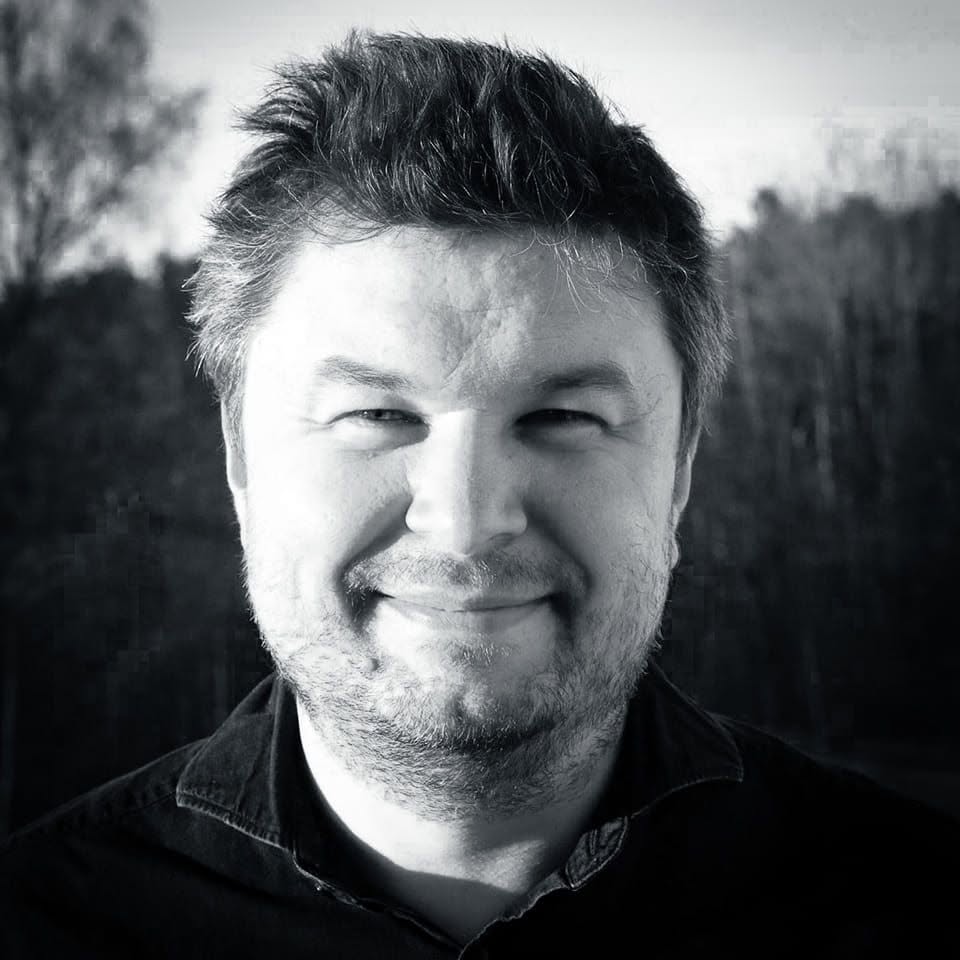
Ervin Adojaan
Designer. Educator. Creative practitioner.

I’m a designer and educator based in Tallinn, working across media, art and digital technology. Teaching is now the main focus of my professional life, grounded in a design practice that connects ideas, people and the world we make.

I founded my own design studio in 1996 and continue to work independently across interior, graphic and product design. After graduating in design from the Estonian Academy of Arts in 1998, I served as an associate professor in its Faculty of Design from 2000 to 2007.

In 2020, I brought this experience into secondary education, where I teach media, art and digital technology. Moving into the school classroom was a natural continuation of my work as a designer and university educator: a way to help young people discover their creative potential earlier in life.

Years of professional practice and mentoring design students have shaped my belief that creative thinking, digital confidence and the foundations of a future creative career should begin at school. I connect practical design experience with contemporary digital tools, helping students move from an initial idea to a considered, tangible result.

For me, teaching is an inspiring exchange that continually enriches my own practice. It creates a bridge between school learning, academic design and the wider creative professions, giving students the confidence to explore where their ideas might lead.

1996–presentFounder of an independent design studio
A continuing practice across interiors, objects and visual identities
1998Design graduate
Estonian Academy of Arts
2000–2007Associate professor
EKA Faculty of Design
2020–presentMedia, art & digital technology teacher
Secondary education in Tallinn
2026–2027Leading the school’s aesthetics subject group
Supporting teachers’ shared planning and development
03 / Supporting the learner

Different starting points.
Space to grow.

A practical creative task can reveal spatial thinking, persistence or technical intuition that is less visible elsewhere. I pay attention to the process as well as the finished work.

01

Know the learner

I use creative tasks, conversations and observation to understand students’ interests, existing skills and needs. The tools, complexity and amount of guidance can then change to suit the learner.

02

Make room for experiments

A supportive studio is a place where students can share an unfinished idea, try something unfamiliar and make mistakes. Clear goals and respectful relationships give that freedom a useful direction.

03

Give feedback that moves work forward

We discuss form, proportion and meaning alongside technical feasibility. Sketches, models and printed tests make feedback specific and give students a chance to revise their decisions.

The learning process
  1. Understand
  2. Explore
  3. Sketch
  4. Make
  5. Test
  6. Reflect

Students learn to frame a problem, compare alternatives and explain their choices. Digital tools help them turn an idea into something they can examine, share and improve.

04 / The school & the wider world

Learning happens
between people.

I build connections between subjects, colleagues, universities and professional practice.

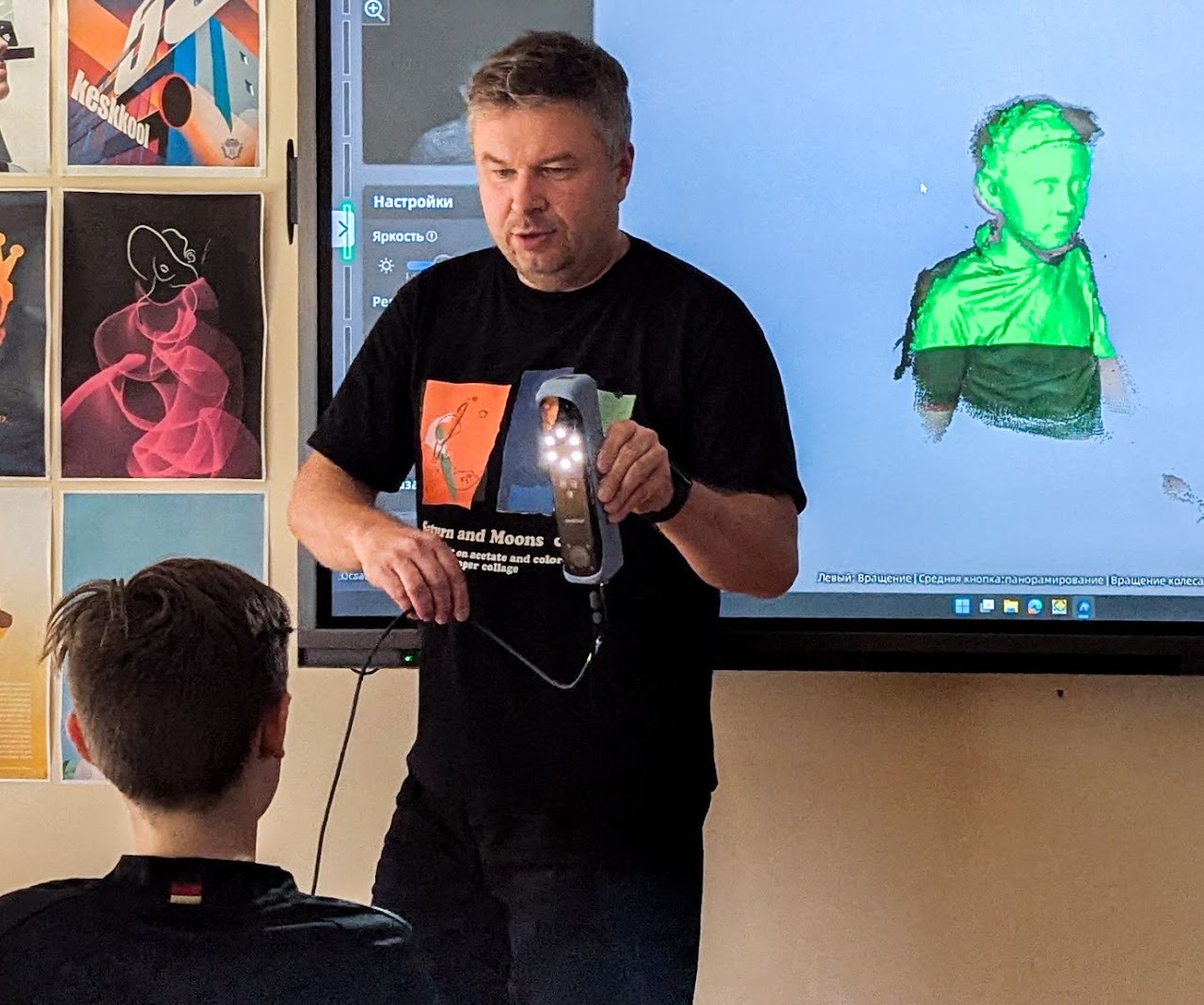
Ervin Adojaan demonstrating 3D scanning to students in the classroom
Introducing 3D scanning in the classroom — learning through demonstration and dialogue.

A shared teaching practice

I work with colleagues to develop STEAM projects that connect art and digital technology with mathematics, physics, chemistry and history. My contribution is often the visual or technical approach: making a scientific idea visible, modelling an artefact or designing a practical object.

From the 2026–2027 school year, I lead the aesthetics subject group. This extends my work in joint projects into more systematic support for shared planning, teaching materials and professional dialogue.

School meets university

I initiated cooperation with TalTech’s School of Engineering, including mentoring a student intern who supported AutoCAD teaching. Visits and encounters with EKA and Aalto University help students see workshops, study programmes and possible routes into higher education.

My mentoring also supports students as they develop creative portfolios and make study choices. The aim is to help them take ownership of their next steps, with professional feedback available along the way.

Beyond the timetable

Since 2022, I have run a free computer graphics club at school. It gives students time to explore photography, animation, video, 3D printing and immersive technologies. More experienced students can share their knowledge through workshops for their peers.

Sharing across borders

Through Erasmus+ and eTwinning activities, I contribute digital learning scenarios and exchange approaches with international colleagues. My documented learning units include book-cover design, chemistry in augmented reality, historical artefacts, room planning and visual explorations of physics.

Visits to Disainiöö and collaboration with cultural and community partners help connect classroom learning with the world where these skills are used.

05 / Reflection & professional development

Still learning.
Always making.

The next version of a lesson begins with what the previous one taught me.

I analyse students’ work, talk with learners and observe where a task becomes difficult. That feedback shapes the next brief. In a historical-object modelling project, for example, unrestricted choice sometimes led to objects too complex for the available time. I refined the selection criteria so students could choose an achievable challenge and focus on the essential form.

Aalto University’s Radical Creativity and Starting Up programmes have informed my thinking about creativity, design and purposeful experimentation. I connect professional learning with immediate classroom use and share relevant approaches with colleagues.

In 2026, I participated in research on art teaching in linguistically diverse upper-secondary classrooms. This encouraged me to examine how visual demonstrations, step-by-step guides and practical work can support understanding across different levels of Estonian proficiency.

My continuing direction is to strengthen the links between creative practice, educational research and mentoring—and help students make informed choices about their future.

Creative freedom comes with responsibility.

Copyright, attribution, responsible use of AI and care for other people are part of the design process. I ask students to consider where visual material comes from, how they use it and what their work communicates.

Further reading / In Estonian

The teaching portfolios.

Explore the original reflections, teaching materials and supporting evidence behind this selection.

Latest teaching portfolio Earlier teaching portfolio

Teaching focus

    Reflection